

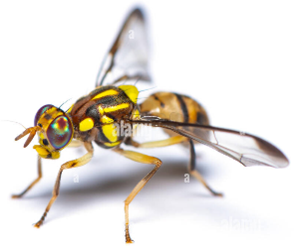
Tephritid Fruit flies

Tephritid Fruit flies

Tephritid fruit flies (family: Tephritidae) are among the most economically significant pests in horticulture, affecting over 400 commercial crops worldwide. Key genera of concern include Bactrocera, Ceratitis, Anastrepha, and Rhagoletis. Infestations lead to massive economic losses due to fruit damage, trade restrictions, and high pesticide use.

A table outlining the key regions, species, and main hosts is listed below:

Region Key Species Main Hosts
Southeast Asia Bactrocera dorsalis, B. correcta, B. cucurbitae Mango, guava, banana, papaya, tomato
Middle East Dacus sp., B. zonata and Ceratitis capitata Mango, guava, papaya, citrus
Africa C. capitata, Bactrocera invadens, B. cucurbitae Citrus, mango, coffee
North America Anastrepha ludens, Rhagoletis pomonella Citrus, apple, mango
Latin America Anastrepha spp., C. capitata Mango, guava, citrus
Europe C. capitata Citrus, stone fruits
Australia Bactrocera tryoni, B. neohumeralis, C. capitata Stone fruits, citrus, apples

Bactrocera dorsalis (Oriental fruit fly): Fly Tract ME

Target crops: Mango, Guava, Papaya, Tomato, Banana & Custard apples
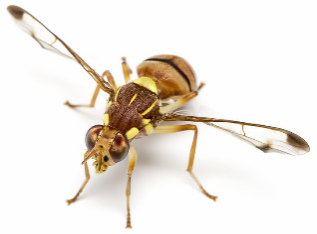
Bactrocera cucurbitae (Melon fly): Fly Tract CL

Target crops: All types of Vegetable cucurbits and Melon fruits
Cole crops are damaged by Plutella xylostella (Diamondback moth - DBM) particularly affecting brassica crops like cabbage, broccoli, and cauliflower. Originally, pesticides were used to kill the moths but diamondbacks have developed resistance to many of the common chemicals. An early-stage control of DBM is developed using Kairomones formulation (Allu-De) which can attract the DBM thereby reducing the infestation at the early stage in the agricultural field.

Plutella xylostella (Diamondback Moth): Allu-De

Target crops: Cabbage, Cauliflower & Broccoli